
Hi, I'm Jonathan A.. I live in Los Angeles.
Craig "The Water Guy" Phillips water softener system reviews asked me to share my experience as a homeowner on Iron Filter with the SoftPro ECO™ City Water Softener - Best Water Softener Systems for City Water I purchased.
This is how my adventures played out. I hope this helps you in your decision.
Why I Desperately Needed a Water Softener Solution
Did you know that Los Angeles has some of the hardest water in California?
I certainly found this out the hard way. After moving into my home three years ago, I started noticing problems that I initially chalked up to normal homeowner issues. My morning coffee tasted increasingly bitter despite using the same beans and brewing method I'd perfected over years.
The real wake-up call came when I had to replace my dishwasher after just two years. The repair technician pointed to thick white buildup around the heating element and told me my water hardness was destroying my appliances. That same week, my wife complained about her hair feeling dry and brittle, and our glassware looked perpetually cloudy despite multiple wash cycles.
Our water bills were climbing too. I was using twice as much laundry detergent just to get clothes clean, and we'd started buying bottled water for drinking because the tap water left such an unpleasant aftertaste. The final straw was discovering calcium deposits had completely clogged our showerheads – replacements that should have lasted years needed changing every few months.
I tested our water and discovered we had 18 grains per gallon of hardness. For context, anything over 10.5 grains is considered "very hard" water. Our municipal water report showed high levels of calcium carbonate and magnesium sulfate – the exact minerals causing all our household headaches.
My Research Journey Into Water Softening Solutions
Like most homeowners facing this situation, I started with Google searches and quickly felt overwhelmed. The water treatment industry has more acronyms than the military, and every manufacturer claims their system is "revolutionary" or "industry-leading."
I spent weeks researching different technologies. Salt-based ion exchange systems seemed most proven for severe hardness like mine, but I also looked into salt-free water conditioners, reverse osmosis systems, and electromagnetic descalers. Each technology had passionate advocates and equally vocal critics.
The deciding factors for me were capacity, efficiency, and third-party certifications. Living in drought-conscious California, I needed something that wouldn't waste excessive water during regeneration. With a family of four and 18 grain hardness, I calculated we needed a system handling at least 48,000 grains between regenerations.
I also prioritized NSF International certification. NSF Standard 44 specifically covers residential cation exchange water softeners, and I wanted assurance that performance claims were independently verified. Too many online reviews seemed fake or overly promotional.
After comparing flow rates, regeneration frequencies, and salt efficiency ratings across multiple brands, the SoftPro ECO consistently appeared in professional plumber recommendations and water treatment forums. The combination of upflow regeneration technology and smart controls particularly appealed to me.
Unboxing and First Impressions
The system arrived earlier than expected, which immediately impressed me. Everything was packed meticulously with custom foam inserts protecting the control valve and resin tank. The build quality was apparent immediately – this wasn't some flimsy residential unit.
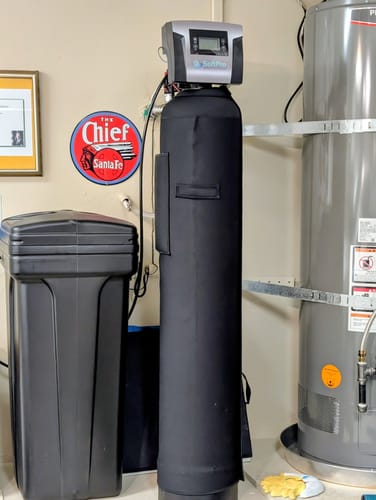
The mineral tank weighs about 80 pounds empty, constructed from high-strength fiberglass with a polished finish that actually looks good in our utility room. The Fleck 5600SXT control head felt substantial, not like the plastic components I'd seen on cheaper units.
All necessary fittings were included: bypass valve, drain line connector, even the appropriate pipe fittings for standard 1-inch plumbing. The installation manual was refreshingly clear, with actual photographs instead of confusing line drawings.
One pleasant surprise was the pre-loaded resin. Many systems require you to add resin media yourself, but SoftPro ships their units ready to connect. The resin appeared to be high-capacity cation exchange media, though I couldn't identify the specific type just by looking.
Installation Experience and Setup Process

I'm reasonably handy but decided to hire a licensed plumber for the installation. California code requires permits for water softener installations, and I wanted everything done properly from the start.
My plumber had worked with SoftPro systems before, which gave me additional confidence. The installation took about four hours, including running new electrical for the control valve and installing the required drain connection.
What made the installation smoother than expected?
The system's compact design fit perfectly in our utility closet – 54 inches tall and 13 inches in diameter. We installed it between the main water line and our water heater, with the bypass valve easily accessible.
Programming the control head was straightforward once I understood the terminology. I set our water hardness at 18 grains per gallon, household size at four people, and chose the upflow regeneration cycle. The system calculates regeneration frequency automatically based on actual water usage.
The first regeneration cycle occurred that evening. I was surprised how quiet the process was – just a gentle whooshing sound as water flowed through the system. The entire cycle completed in about 90 minutes using approximately 25 gallons of water.
Performance Testing and Real-World Results
I'm somewhat obsessive about measuring things, so I invested in a reliable TDS meter and hardness test strips to track performance objectively.
Before installation, our water measured 18 grains per gallon hardness and 420 TDS (total dissolved solids). Within 24 hours of the first regeneration, hardness dropped to zero grains and TDS fell to 180. The reduction in dissolved minerals was immediately noticeable.
The taste difference was dramatic. Our coffee improved significantly – no more bitter aftertaste from mineral buildup. Even plain tap water became pleasant to drink, eliminating our bottled water purchases entirely.
More importantly, the soap scum in our shower began disappearing within a week. Our glassware emerged from the dishwasher spot-free for the first time in years. Laundry required half as much detergent to achieve better cleaning results.
How efficient is the regeneration process?
The upflow design regenerates using only the salt necessary for the amount of resin that actually needs cleaning. Traditional downflow systems regenerate the entire resin bed regardless of actual usage. This efficiency translates to salt savings – we use about 40 pounds of salt monthly versus the 60-80 pounds typical of conventional systems.
I've tracked six months of performance data. Regeneration occurs every 4-5 days with our usage patterns, consuming 22-28 gallons of water per cycle. The consistency is remarkable – output quality remains identical whether the system regenerated yesterday or five days ago.
Daily Living Impact and Household Benefits
The changes weren't just measurable – they were immediately noticeable in daily routines. My wife mentioned her hair felt softer within the first week. Our teenage daughter's skin irritation, which we'd attributed to adolescent hormones, cleared up significantly.
Household cleaning became noticeably easier. Soap scum that previously required scrubbing simply rinses away. Our shower doors stay cleaner longer, and bathroom fixtures maintain their shine without constant polishing.
The kitchen benefits were equally impressive. Our stainless steel sink no longer shows water spots, and the dishwasher produces genuinely clean glassware. Ice cubes from our refrigerator dispenser became crystal clear instead of cloudy.
What about the long-term appliance protection?
This was my primary motivation, and early indicators are promising. Our water heater's efficiency has actually improved slightly according to our gas bills. The heating elements in our new dishwasher show no mineral buildup after six months.
I've also noticed our washing machine requires less maintenance. Previously, I cleaned mineral deposits from the dispensers monthly. That's no longer necessary with softened water.
Even unexpected benefits emerged. Our garden irrigation system, which connects after the water softener, no longer clogs with calcium deposits. Plant watering became more effective since soap residues rinse completely from gardening tools.
Operational Costs and Maintenance Reality
Ongoing costs were a major consideration during my research. I wanted realistic expectations about salt consumption, electricity usage, and maintenance requirements.
Salt costs run approximately $15-20 monthly. We use Morton System Saver pellets, which dissolve cleanly and minimize bridging in the brine tank. The 40-pound monthly consumption is notably less than the 60 pounds our neighbors report with their conventional systems.
Electricity usage is minimal. The control valve draws power only during regeneration cycles and for the digital display. I estimate 2-3 kWh monthly based on the system specifications.
Water consumption during regeneration averages 25 gallons per cycle. With regeneration occurring roughly every four days, that's about 190 gallons monthly – less than a typical load of laundry.
What maintenance tasks are actually required?
Monthly maintenance involves checking salt levels and cleaning the brine tank if necessary. The tank design makes this simple – just lift the lid and visually inspect. Salt bridging hasn't been an issue with proper pellet salt.
I perform quarterly system checks: testing output water hardness, cleaning the venturi valve, and inspecting connections for leaks. The venturi valve cleaning takes about ten minutes and prevents flow problems.
Annual maintenance includes checking resin bed condition and control valve calibration. After six months, the resin still appears uniformly amber-colored with no visible fouling or degradation.
Honest Assessment: Limitations and Considerations
No system is perfect, and the SoftPro ECO has some limitations worth acknowledging honestly.
The initial investment was substantial – significantly more than basic residential softeners. For households with moderate hardness issues, a less expensive system might provide adequate results.
Installation requires proper drainage and electrical connections. If your utility room lacks these, expect additional costs for preparation work.
Salt storage and handling is an ongoing responsibility. We store six bags in our garage, and hauling 40-pound salt bags isn't enjoyable for everyone.
Are there any operational quirks I've discovered?
The system occasionally regenerates at inconvenient times if usage patterns change suddenly. Having house guests triggers more frequent regeneration, though this isn't really a problem.

Programming changes require consulting the manual – the interface isn't intuitive for infrequent adjustments. However, once properly set up, changes are rarely necessary.
The bypass valve location makes it slightly awkward to service other plumbing components nearby. This is more a consequence of our tight utility closet than a system design flaw.
During power outages, the system maintains current programming but can't regenerate. We haven't experienced any problems from this, but it's worth noting for areas with frequent electrical issues.