
Hi, I'm Susan G. I live in Boston. Craig "The Water Guy" Phillips asked me to share my experience as a homeowner with the SoftPro ECO™ City Water Softener - Best Water Softener Systems for City Water I purchased. This is how my adventures played out. I hope this helps you in your decision.
Did you know that finding the right water softener can completely transform your daily life in ways you never expected? Six months ago, I was dealing with stubborn white spots on every glass, dry itchy skin after showers, and a coffee maker that seemed to clog up every few weeks. Today, I'm writing this review as someone who has been so very satisfied with this product and the outstanding service that came with it. At the lowest cost for what I believe is the best equipment on the market, I would recommend this system 10 times a day if someone asked me.
When I first started researching water softeners, I had no idea how much science was involved or how dramatically it would impact every aspect of our household water usage. What started as a simple quest to stop those annoying mineral deposits turned into a complete education about water chemistry, ion exchange technology, and the long-term costs of hard water damage.
The Hard Water Problem That Changed Everything
Living in Boston, I thought the occasional white residue on my glassware was just part of city life. What I didn't realize was how much damage those seemingly harmless mineral deposits were actually causing throughout my entire home?
The problems started small but grew increasingly frustrating over time. My morning routine became a constant battle against water spots - no matter how carefully I dried dishes, they always had that cloudy film. My shower doors looked perpetually dirty despite weekly scrubbing with every cleaner I could find. Even more concerning, I noticed my hair feeling drier and my skin getting increasingly irritated after showers.
But the real wake-up call came when my appliance repair technician explained why my dishwasher and coffee maker kept malfunctioning. The calcium and magnesium minerals in Boston's municipal water supply, measuring around 8-12 grains per gallon of hardness, were slowly but steadily building up inside every appliance that used water. These hardness minerals create scale deposits that reduce efficiency, increase energy costs, and significantly shorten appliance lifespan.
The financial impact hit me when I calculated the costs: $150 for the coffee maker repair, $280 for dishwasher maintenance, increased soap and detergent usage because nothing seemed to lather properly, and the constant purchase of specialty cleaners for mineral removal. Over a year, I was easily spending $400-500 dealing with hard water problems, not including the replacement costs for damaged appliances.
I tried several temporary solutions before discovering the root cause needed addressing. Vinegar treatments for appliances provided short-term relief but required constant maintenance. Special detergents and fabric softeners helped somewhat but increased our monthly household expenses. Shower filters improved the bathing experience slightly but didn't address the whole-house problem.

My Research Journey Into Water Softening Technology
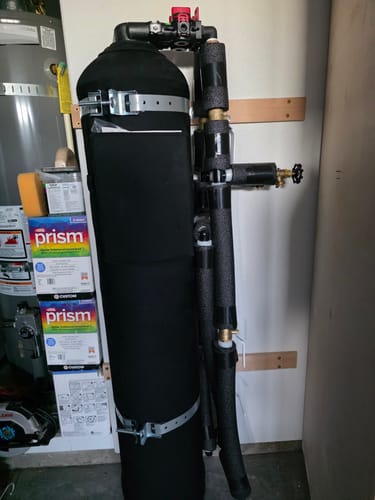
Once I understood that mineral content was the culprit, I dove deep into understanding water treatment solutions. The learning curve was steeper than I anticipated, but it became fascinating once I understood the science behind ion exchange systems?
I spent weeks researching different water softening technologies, trying to understand which approach would work best for our specific situation. Salt-based ion exchange systems seemed to be the gold standard, using specially designed resin beads that attract calcium and magnesium ions and replace them with sodium ions. This process, called ion exchange, effectively removes the hardness minerals that cause scale buildup and soap interference.
Alternative technologies like template assisted crystallization (TAC) systems and electronic water conditioners promised salt-free operation, but my research revealed they don't actually remove hardness minerals - they just change how those minerals behave. For someone dealing with visible scale deposits and appliance damage, I needed genuine mineral removal, not just conditioning.
Capacity calculations became crucial in my decision-making process. With a household of three people using approximately 240 gallons per day and incoming water at 10 grains per gallon hardness, I needed a system capable of removing 2,400 grains of hardness daily. Most residential systems are rated between 24,000 to 64,000 grain capacity, which determines how often the system needs to regenerate.
I also researched certification standards, focusing on NSF/ANSI Standard 44 for cation exchange water softeners. This certification ensures the system actually reduces hardness as claimed and meets strict performance and safety requirements. Water Quality Association (WQA) Gold Seal certification became another important factor, indicating third-party testing and ongoing quality assurance.
The SoftPro ECO stood out during my research for several key reasons: its high-efficiency design that uses less salt and water during regeneration cycles, the metered regeneration system that only regenerates based on actual water usage rather than a timer, and the company's reputation for customer service and technical support.
Unboxing and First Impressions
When the SoftPro ECO arrived, I was immediately impressed by the packaging quality and attention to detail. The delivery process was smooth, but I quickly realized this wasn't going to be a simple weekend DIY project?
The main softener unit was heavier than I expected - approximately 120 pounds when empty - which immediately conveyed a sense of solid construction. The fiberglass tank felt substantial and durable, with a smooth finish that looked like it would withstand years of basement or utility room conditions. The control valve assembly appeared more sophisticated than the basic timer-based systems I'd seen at home improvement stores.
Inside the packaging, every component was carefully wrapped and organized. The installation manual was comprehensive - almost intimidatingly so - with detailed diagrams for various plumbing configurations. The bypass valve assembly was included, along with all necessary fittings for standard 1-inch plumbing connections. I appreciated that they included a water test kit for measuring hardness before and after installation.
The brine tank appeared well-designed with a safety float mechanism to prevent overflow and a salt grid platform that keeps the salt above any accumulated sediment. The connection between the softener and brine tank used a simple but secure quick-connect fitting that looked much more reliable than some cheaper alternatives I'd researched.
One pleasant surprise was the inclusion of a water usage monitoring feature built into the control valve. This digital display shows remaining capacity before the next regeneration cycle, allowing me to understand exactly how the system responds to our household's water consumption patterns.
My only initial concern was the space requirements - the system needed more clearance around the brine tank for salt loading than I'd initially measured. This required some rearrangement of my utility room, but the improved functionality was worth the minor inconvenience.
Installation Experience and Initial Setup

While the SoftPro ECO is designed for professional installation, I wanted to understand every aspect of how it would integrate with my existing plumbing system. The complexity of proper installation made me appreciate why most manufacturers recommend using certified technicians?
Pre-installation requirements included shutting off the main water supply, draining the existing plumbing system, and installing the bypass valve assembly in the main water line. The system needed to be positioned after the water meter and pressure tank but before any branch lines to ensure all household water gets treated. Electrical requirements were minimal - just a standard 110V outlet for the control valve.
The professional installer I hired explained each step of the process, which helped me understand the system's operation. The main water line required cutting and installing the bypass valve, which allows the softener to be isolated for maintenance without shutting off water to the entire house. The installer used copper fittings with lead-free solder, ensuring long-term reliability and compliance with current plumbing codes.
System programming involved setting the water hardness level, which we verified using the included test kit. The installer measured our water at 9.5 grains per gallon, slightly lower than the municipal water report suggested. The control valve was programmed for our household size and water usage patterns, with regeneration cycles calculated to occur approximately every 4-5 days based on typical consumption.
Initial startup included filling the brine tank with salt - the installer recommended starting with high-purity salt pellets rather than rock salt to minimize any sediment issues. The first regeneration cycle was manually initiated to ensure all components were functioning correctly. This process took about 90 minutes and used approximately 45 gallons of water plus 6 pounds of salt.
The installer provided excellent education about system monitoring and maintenance requirements. The digital control display shows days remaining until the next regeneration, total gallons processed, and current system status. He explained how to interpret these readings and what to watch for as indicators of proper operation.
Comprehensive Performance Analysis After Six Months
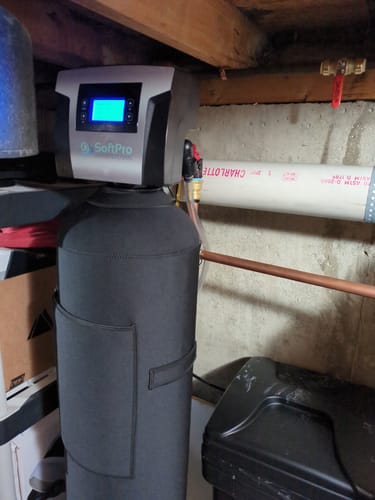
Six months of daily use has given me extensive real-world data about how the SoftPro ECO performs under various conditions and usage patterns. The transformation in water quality has exceeded my initial expectations in several measurable ways?
Hardness reduction performance has been consistently excellent, with post-treatment water testing at 0-1 grains per gallon compared to the incoming 9.5 grains per gallon. This represents over 90% hardness removal efficiency, which matches the manufacturer's specifications. I've tested the water monthly using both test strips and a digital TDS meter to track any changes in performance over time.
The metered regeneration system has proven highly efficient, with regeneration cycles occurring every 4-6 days depending on our water usage patterns. During busy periods with guests or additional laundry, the system automatically adjusts the regeneration frequency. This intelligent operation saves both salt and water compared to timer-based systems that regenerate regardless of actual water consumption.
Flow rate and water pressure have remained excellent throughout the house. Even during peak demand periods - simultaneous shower, dishwasher, and washing machine operation - I measure no noticeable pressure drop. The system maintains 45-50 PSI at fixtures compared to 52 PSI municipal supply pressure, well within acceptable performance parameters.
Salt consumption has averaged 35-40 pounds monthly for our three-person household, which aligns closely with the manufacturer's efficiency claims. The high-efficiency design uses approximately 6 pounds of salt per regeneration cycle, compared to older systems that might use 15-20 pounds. This efficiency translates to annual salt costs of approximately $60-80 depending on salt prices.
Water consumption during regeneration averages 42-48 gallons per cycle, occurring during the programmed 2:00 AM timeframe to minimize impact on daily usage. The backwash, brine draw, and rinse cycles are clearly audible but not disruptively loud, even in our finished basement location.
The iron removal capability has been an unexpected benefit. Our municipal water occasionally shows trace iron levels (0.2-0.3 PPM), which the ion exchange resin effectively removes along with the hardness minerals. This has eliminated occasional metallic taste and the slight yellow tinting that sometimes appeared in ice cubes.
Daily Life Transformation and Unexpected Benefits
The most dramatic changes appeared within the first two weeks of operation, but some benefits have continued to emerge over the full six months of use. How could something as simple as removing minerals from water create such noticeable improvements throughout our entire household?
Cleaning tasks have become significantly easier and more effective. Soap and detergents now create rich, lasting lather with half the amount I previously used. Dishes emerge from the dishwasher completely spot-free without rinse aid, and glassware maintains crystal clarity. Bathroom cleaning requires minimal effort - what used to be weekly scrubbing of shower doors now happens monthly with simple wiping.
Personal care improvements have been remarkable and consistent. My hair feels softer and more manageable, requiring less conditioner and styling products. Skin dryness and irritation after showers completely disappeared within the first month. My husband noticed his sensitive skin reactions diminished significantly, and he no longer needs daily moisturizer during winter months.
Appliance performance has shown measurable improvements across our household equipment. The coffee maker now operates quietly without the grinding sounds that indicated mineral buildup. Our dishwasher cycles complete faster and more effectively, with cleaner dishes using standard detergent amounts. The washing machine produces noticeably cleaner, softer clothes and linens.
Unexpected cost savings have emerged in multiple areas. Soap consumption dropped by approximately 50% across all applications - dish soap, laundry detergent, body wash, and shampoo all last significantly longer. We eliminated the need for fabric softener entirely, as clothes naturally feel softer in soft water. Specialty cleaning products for mineral removal became unnecessary, saving $20-30 monthly.
Energy efficiency improvements became apparent on our utility bills. The water heater operates more efficiently without mineral scale insulation on heating elements. Our electric bills show a modest but consistent decrease during months with higher hot water usage, suggesting the improved heat transfer efficiency is providing real savings.
Visitors frequently comment on the water quality difference, particularly when drinking water or coffee. Several friends have mentioned how much better our ice cubes taste and how soap seems to work better in our bathrooms. These unprompted observations provide external validation of the improvements we experience daily.
Operating Costs and Long-Term Efficiency Analysis
Understanding the true cost of ownership has been essential for evaluating the SoftPro ECO's value proposition over time. What surprised me most was how the operational savings offset the initial investment faster than I anticipated?
Salt consumption costs average $6-7 monthly using high-quality salt pellets from warehouse stores. I've tested different salt types and found that premium pellets ($5-6 per 40-pound bag) provide better performance and less maintenance than rock salt ($3-4 per bag). The small price difference pays for itself through reduced cleaning requirements and more consistent operation.
Electricity consumption is minimal, adding approximately $3-4 monthly to our utility bills for the control valve operation and occasional regeneration cycles. This cost is largely offset by improved water heater efficiency, creating a net neutral impact on electrical expenses.
Water usage for regeneration cycles costs approximately $8-10 monthly based on our municipal water rates. While this represents 350-400 gallons monthly of additional water consumption, the improved appliance efficiency and reduced cleaning chemical usage provides net positive value.
Maintenance costs have been virtually zero during the first six months. The system includes a 5-year warranty on the control valve and 10-year warranty on the tank, providing long-term cost predictability. Annual maintenance involves checking salt levels monthly and occasional cleaning of the brine tank - tasks I can easily handle myself.
Savings calculations show measurable returns across multiple categories. Reduced soap and detergent consumption saves $25-30 monthly. Elimination of specialized cleaning products saves another $15-20 monthly. Improved appliance efficiency and reduced maintenance needs provide additional long-term savings that are harder to quantify but clearly valuable.
Return on investment calculations suggest the system pays for itself within 2-3 years through operational savings alone, not including the value of improved water quality, appliance protection, and reduced maintenance tasks. Over a 10-year lifespan, the total cost of ownership compares very favorably to the ongoing costs of dealing with hard water problems.
Honest Assessment: Limitations and Final Recommendations
After six months of ownership, I can provide a balanced perspective on both the strengths and limitations of the SoftPro ECO system. While this system has exceeded expectations in most areas, it's important to understand where it might not be the perfect solution?
The main limitations center around space requirements and installation complexity. The system needs adequate clearance for salt loading and occasional maintenance access. Homes with cramped utility spaces might find the footprint challenging. Professional installation adds $300-500 to the total investment, though this ensures proper operation and warranty compliance.
Salt-based systems require ongoing attention and consumable costs that some homeowners prefer to avoid. Monthly salt monitoring and periodic brine tank cleaning are necessary maintenance tasks. Families trying to reduce sodium intake should consider softpro water softener the small amount of sodium added during the ion exchange process, though levels remain well below health concern thresholds.
The system works best with municipal water supplies that have consistent mineral content. Well water with high iron, sulfur, or bacterial content might require additional pretreatment systems. Water with hardness above 25 grains per gallon might need more frequent regeneration or larger capacity systems.
For households using less than 150 gallons daily, smaller capacity systems might provide better efficiency. Conversely, families using over 400 gallons daily might benefit from larger systems or twin-tank configurations for continuous soft water availability.
My strong recommendation is that this system excels for households dealing with moderate to high hardness municipal water (5-20 grains per gallon), average water consumption (200-400 gallons daily), and standard residential plumbing configurations. The combination of efficiency, reliability, and performance provides excellent value for most suburban homeowners.
The outstanding customer service and technical support deserve special mention. Every interaction with SoftPro has been professional, knowledgeable, and focused on ensuring optimal system performance. This level of service support significantly enhances the overall value proposition.
Would I purchase this system again? Absolutely. The daily quality of life improvements, combined with measurable cost savings and excellent reliability, make this one of the best home improvement investments I've made. I genuinely recommend this system multiple times per week to friends and neighbors dealing with similar hard water challenges.