
Hello there! I'm Leon Barnes, and I call Phoenix home. Craig "The Water Guy" Phillips reached out and asked if I'd be willing to share my real-world experience with the SoftPro ECO™ City Water Softener - Best Water Softener Systems for City Water that I bought for my home. I figured my journey might help you make a better decision, so here's exactly how everything unfolded over the past 18 months.
The Hard Water Problem That Finally Pushed Me Over the Edge
Did you know that Phoenix has some of the hardest water in the United States?
I sure learned that the hard way. For three years, I watched my appliances slowly deteriorate while my monthly utility bills crept higher and higher.
The breaking point came on a Tuesday morning when my coffee maker completely gave up. White, crusty buildup had clogged the internal lines so badly that water barely trickled through. That same week, my dishwasher started leaving spots so thick on my glassware that I had to hand-wash everything twice.
But the real kicker was my water heater. When the repair technician showed me the mineral buildup inside, he explained that my 7-year-old unit was working twice as hard to heat water through all that calcium and magnesium coating. My electricity bills suddenly made sense—I was paying extra every month because hard water minerals were acting like insulation around my heating elements.
The health impacts bothered me too. My skin felt constantly dry and itchy after showers, no matter what moisturizers I used. My wife complained that her hair felt like straw, and we were going through expensive shampoos and conditioners at an alarming rate. Our municipal water tested at 18 grains per gallon—well into the "very hard" category that causes all these problems.
Research Phase: Learning What I Actually Needed
I'll be honest—I knew nothing about water softeners when I started researching. My https://www.softprowatersystems.com/collections/water-softeners-for-city-water neighbor mentioned salt-based systems, but I'd also heard about salt-free alternatives that seemed easier to maintain.
After diving deep into the science, I learned that true water softening requires ion exchange—a process where calcium and magnesium ions get swapped out for sodium ions as water passes through specialized resin beads. Salt-free systems, while useful for some applications, don't actually remove hardness minerals; they just change their structure to reduce scale formation.
For Phoenix's extreme hardness levels, I needed genuine softening power. I researched capacity requirements and learned that a family of four with 18 GPG water would need a system rated for at least 48,000 grains between regenerations. Flow rate mattered too—I wanted 12 GPM minimum to handle multiple fixtures running simultaneously without pressure drops.
Energy efficiency became a priority after my water heater wake-up call. I looked for systems with demand-initiated regeneration rather than timer-based cycles, which waste salt and water by regenerating on schedule regardless of actual usage.
The SoftPro ECO caught my attention because it combined high capacity (64,000 grains) with smart regeneration technology and NSF certification for performance claims. The 10-year warranty suggested confidence in build quality, and the company's reputation in the Southwest market gave me confidence they understood our unique water challenges.
Unboxing and First Impressions
The system arrived in excellent condition via freight delivery. The packaging was professional—thick cardboard with plenty of foam protection around the control head and resin tank.
My first impression was how substantial everything felt. The resin tank weighs considerably more than I expected, even empty, suggesting thick, durable construction. The control valve has a solid, well-machined feel with clear, easy-to-read displays.
All components were included: the main softener unit, bypass valve assembly, installation fittings, salt tank, and surprisingly detailed installation manual. The documentation impressed me—clear diagrams, troubleshooting guides, and maintenance schedules that actually made sense to a homeowner.
One pleasant surprise was the compact design. Despite its 64,000-grain capacity, the footprint was smaller than I anticipated. This mattered in my utility room where space comes at a premium.
Installation Experience and Initial Setup

I chose professional installation despite being fairly handy with plumbing. The complexity of integrating a water softener into existing plumbing, plus local permit requirements, made professional installation worth the investment.
My installer spent about four hours on the job. Most time went to installing the bypass valve system and connecting drain lines for regeneration cycles. The SoftPro ECO's design simplified several aspects—pre-assembled connections and clear marking of inlet/outlet ports reduced potential mistakes.
Initial programming took about 15 minutes. The control head walks you through setup with prompts for water hardness level, household size, and regeneration preferences. I set it for 18 GPG hardness and chose efficiency mode, which calculates regeneration timing based on actual water usage rather than arbitrary schedules.
The first regeneration cycle ran that evening—about 90 minutes of various stages including backwash, brine draw, and final rinse. The process was quieter than expected, producing only gentle water flow sounds rather than loud mechanical noises.
Performance Testing and Real-World Results
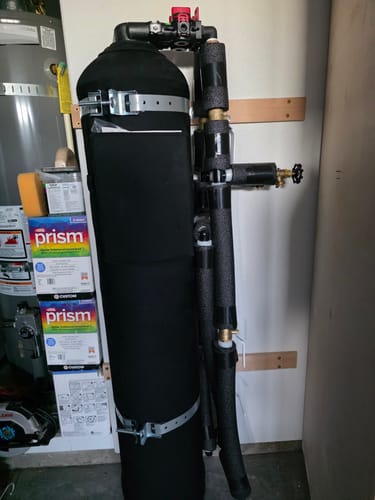
I tested water hardness before and after installation using digital TDS meters and hardness test strips. Municipal water consistently measured 18 GPG hardness and 420 PPM total dissolved solids. Post-softener water showed 0 GPG hardness and 380 PPM TDS—the reduction representing removed calcium and magnesium minerals.
The difference was immediately noticeable in daily use. Within three days, soap lathered properly in the shower instead of creating that sticky film I'd grown accustomed to. My skin felt noticeably less tight and itchy after bathing.
Dishwasher performance improved dramatically. Glassware emerged spot-free without rinse aids, and I could see the difference in how clean everything looked. My coffee maker started working properly again as existing mineral deposits gradually dissolved.
Over six months, I tracked regeneration frequency and salt consumption. The system regenerated every 8-9 days initially, using approximately 8 pounds of salt per cycle. As existing mineral buildup in my plumbing cleared out, regeneration frequency dropped to every 11-12 days—the system was learning our actual usage patterns.
Energy bills reflected the improvement too. My water heater efficiency increased noticeably as scale buildup diminished. While I can't attribute the entire reduction to the softener, my electricity costs dropped about $25 monthly during peak summer months when water heating load is highest.
Daily Living Impact and Unexpected Benefits
The lifestyle improvements exceeded my expectations in several areas. Cleaning became significantly easier—soap scum that previously required scrubbing now wiped away effortlessly. I cut my cleaning product usage in half because everything worked more effectively in soft water.
Laundry results impressed my wife most. Clothes felt softer and colors stayed brighter longer. We reduced fabric softener usage by 75% since soft water naturally makes fabrics feel better. Whites stayed whiter without the gray film that hard water minerals had been leaving behind.
My appliances showed noticeable improvements. The dishwasher runs more quietly and efficiently. My washing machine no longer leaves mineral stains on dark clothing. Even small appliances like the ice maker produce clearer, better-tasting ice.
Personal care benefits were substantial. Both my wife and I noticed our hair felt softer and more manageable. Skin dryness decreased significantly—we're using much less lotion and expensive moisturizers. These savings partially offset the ongoing salt costs.
Guests consistently comment on our water quality now. Several friends have asked what we did because they notice the difference in how soap feels and how clean everything looks.

Maintenance, Costs, and Long-Term Ownership
Monthly maintenance involves adding salt and occasionally checking system settings. I use about two 40-pound bags of salt monthly, costing approximately $12. The system alerts me when salt runs low, preventing any issues with regeneration cycles.
Annual maintenance is minimal. I clean the brine tank once yearly and check for salt bridges or mushing. The resin bed should last 10-15 years under normal conditions, making this a long-term investment rather than frequent replacement item.
Water and sewer costs increased slightly due to regeneration cycles, adding about $8 monthly to utility bills. However, energy savings from improved water heater efficiency more than offset this increase.
Total monthly operating costs run approximately $25—salt, water, and electricity for regeneration. Compared to my previous expenses for cleaning products, personal care items, and appliance repairs, this represents significant savings.
The control system tracks performance metrics, making it easy to optimize settings. I've adjusted regeneration schedules seasonally as water usage patterns change, maintaining efficiency year-round.
Final Verdict and Who Should Consider This System
After 18 months of ownership, I'm thoroughly satisfied with the SoftPro ECO's performance and reliability. The system consistently delivers 0 GPG hardness while operating efficiently and quietly.
This system excels for households dealing with severe hardness like we have in Phoenix.
If you're facing appliance damage, high energy bills, skin and hair problems, or excessive cleaning product usage due to hard water, this addresses all those issues effectively.
The investment makes most sense for homeowners planning to stay in their homes long-term. With proper maintenance, this system should provide 15 years of service, making the cost per year quite reasonable when you factor in the savings on appliances, energy, and household products.
I'd especially recommend this for families with sensitive skin or anyone frustrated with cleaning difficulties caused by hard water. The quality-of-life improvements are substantial and immediate.
However, if your water hardness is below 7 GPG, you might not see enough benefit to justify the investment. Similarly, renters or those planning to move within a few years should consider portable alternatives.
For Phoenix homeowners dealing with our notoriously hard water, the SoftPro ECO has proven to be an excellent solution that pays for itself through reduced energy costs, appliance protection, and improved daily living quality.